Managing uniforms across multiple locations can quickly become complicated.
Different branches may have different requirements, staff join and leave throughout the year, and local managers may all have their own approach to ordering workwear.
Copy of What Makes a Good Branded Gift?
Without a consistent process, businesses risk inconsistent branding, damage to brand reputation, unnecessary administration, overspending and delays in getting the right uniform to the right person. Poorly managed uniform provision can also leave workers without the correct protective clothing or safety equipment, increasing the risk of workplace accidents, non-compliance and reputational damage.
The solution is to create a more structured approach to workwear management. A dedicated workwear ordering portal can give employees access to approved garments while helping businesses maintain control over orders and spending. For more complex requirements, dedicated account management can provide additional support with garment selection, uniform planning and ongoing supply.
In this guide, we'll explore how to manage workwear across multiple locations more efficiently, including how the right ordering system and supplier support can help simplify the process.
Standardise Your Uniform Range Across Sites
Maintaining a consistent company image is easier when every location works from the same approved uniform range. Whether your employees work in offices, warehouses, depots or customer-facing environments, their workwear should reflect your brand and meet the requirements of their role.
We recommend that you start by establishing a core range of approved garments, colours, logos and designs. This gives employees and managers a clear reference point when ordering, reducing the risk of different sites purchasing similar products that vary in appearance or quality.
However, standardisation does not mean every employee needs to wear exactly the same uniform. Different roles may have different practical requirements. Warehouse staff might need durable work trousers and protective footwear, while office teams may require branded polo shirts or smart corporate clothing. Outdoor workers may also need weather-resistant garments.
To create a consistent but flexible approach:
Define approved garments and branding for each department or job role.
Specify which items employees should receive and in what quantities.
Make any role-specific or site-specific variations clear.
Review the range regularly to remove unnecessary product variations and check that garments remain suitable.
A clearly defined uniform range makes ordering simpler, helps control costs and ensures employees represent the business consistently, wherever they work.
Establish Clear Uniform Ordering Processes
One of the most effective ways to improve multi-site uniform management is to simplify how employees and managers place orders.
When every location follows a different process, head office can spend considerable time handling requests, checking product details, correcting mistakes and chasing approvals. This becomes increasingly difficult as the workforce expands.
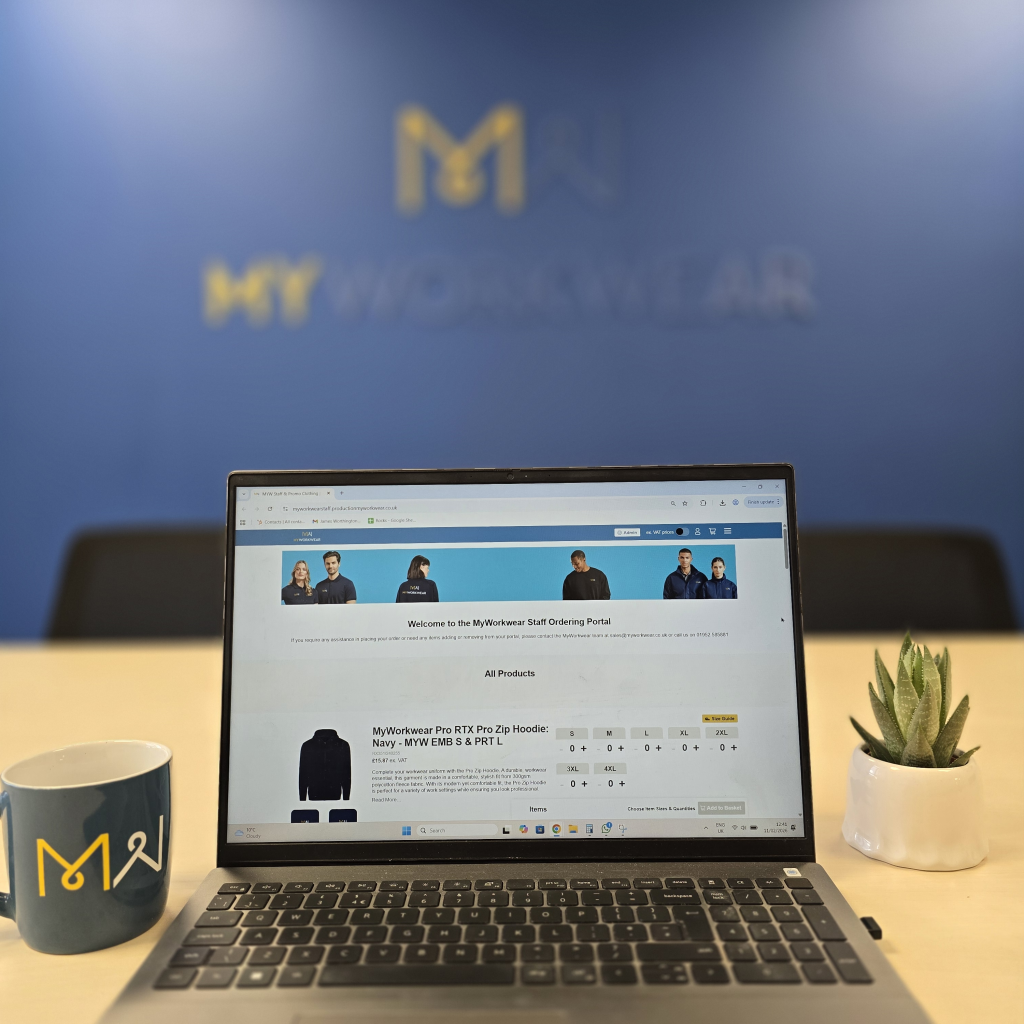
A centralised workwear ordering system provides a more consistent approach. Rather than relying on individual emails or manually maintained spreadsheets, employees and managers can access an approved selection of garments through a dedicated online portal.
Depending on how the system is configured, a portal can help businesses:
Provide access to pre-approved garments and branded designs.
Organise products by department or job role.
Control who can place orders and approve purchases.
Simplify repeat orders and replacement requests.
Maintain greater visibility of ordering activity.
A dedicated portal can also reduce confusion for employees working at different locations. Everyone follows the same process, while central teams retain oversight of the wider workwear programme.
For businesses managing multiple branches, warehouses, offices or depots, this combination of local convenience and central control can make a meaningful difference to day-to-day administration.
Our customer portals are designed to help businesses bring their workwear ordering together through a dedicated branded portal with pre-approved garments and designs.
Keep Workwear Budgets Under Control
Workwear spending can become difficult to track when orders are placed by different branches, departments or individual managers. Without a clear overview, it is easy to lose sight of total expenditure or understand why costs vary between locations.
The first step is to establish a clear budget structure. Depending on your business, this could mean allocating a uniform allowance to each employee, setting budgets by department or assigning spending limits to individual sites.
You should also define when additional approval is required. Routine replacement orders might follow a straightforward process, while larger purchases or requests outside the approved range may need authorisation from a central team.
A workwear ordering portal with appropriate reporting and approval controls can help businesses maintain oversight without manually reviewing every request.
Plan for New Starters, Leavers and Seasonal Demand
Changes in staffing can put pressure on uniform supply, especially when recruitment takes place across multiple locations.
New employees need the correct garments before or shortly after starting work, while existing staff may require replacements or additional items as their responsibilities change. Seasonal recruitment and temporary workers can create further demand at short notice.
For new starters, define a standard uniform issue process that sets out which garments they need, who places the order and where the items should be delivered. Where appropriate, create individual uniform packs containing the garments required for a particular role.
For seasonal recruitment, review expected staffing levels in advance and plan orders around anticipated demand. This can help reduce last-minute requests and give your supplier more time to fulfil requirements.
By treating uniform supply as part of the employee onboarding and workforce management process, businesses can reduce manual coordination and help ensure staff receive the right workwear when they need it.
Knowing When Account Management Can Help
An ordering portal can simplify routine purchases, but businesses with multiple sites may also need support beyond the ordering process itself.
Account management can support businesses with areas such as:
Selecting suitable garments for different roles.
Coordinating branded clothing requirements.
Planning uniform packs for employees or teams.
Managing changing requirements as the business grows.
Providing ongoing support with workwear supply.
For businesses with several locations, having a consistent point of contact can help maintain continuity and reduce the need to repeatedly explain requirements or resolve the same issues.
A dedicated account manager can also complement a centralised ordering portal. The portal supports routine ordering, while account management provides a more personal service for planning, coordination and questions that require additional attention.
We offer managed workwear accounts, with dedicated account management for businesses with more than 25 employees. This can be particularly relevant for organisations looking for a more supported approach to coordinating workwear across their workforce.
Workwear Ordering Portals
A workwear ordering portal can make a real difference to businesses managing uniforms across multiple sites, particularly when employees need different garments or teams are growing. MyWorkwear customers have used portals to simplify ordering, maintain consistent branding and reduce the administration involved in supplying workwear.
Here are examples of how businesses are using workwear ordering portals to meet their needs.
West Mercia Search & Rescue: Supporting Team Kit and Merchandise
West Mercia Search & Rescue uses a MyWorkwear portal to help its volunteers order the workwear they need from an approved selection of garments and colourways, with branding already applied.
The organisation also operates a separate public-facing merchandise portal, allowing supporters to purchase branded items directly. MyWorkwear fulfils these orders, making merchandise more accessible without requiring the organisation to manage the fulfilment process itself.
James Small, Assets Manager at West Mercia Search & Rescue, highlighted how online ordering has made the organisation's branded kit more accessible to its team.
This example shows that workwear portals can support more than employee uniforms. They can also help charities and other organisations distribute branded kit or sell merchandise through a dedicated online store.
Read the West Mercia Search & Rescue case study.
Iconsys: Making Uniform Ordering Easier as the Business Grows
With around 100 employees, Iconsys uses a dedicated workwear ordering portal containing its uniform items and associated logos. This gives employees and managers a straightforward way to order the correct garments while maintaining consistency across the business.
Lisa Grace, Office Manager at Iconsys, highlighted the simplicity of the ordering process and the importance of prompt delivery as the company continues to grow. She also noted that product shortages are communicated quickly, with alternatives suggested where necessary.
For growing businesses, this illustrates the value of having an established ordering process and a supplier that can provide ongoing support as requirements change.
Here at MyWorkwear, we have been proud suppliers of personalised workwear since 1976.
To see how we can provide the perfect workwear for your team to keep them looking professional and performing at their best, please click the button below.