Most businesses manage workwear the way they always have. Someone emails a list, it goes back and forth, sizes change, new starters join, and no one is quite sure where the responsibility lies for ordering. Sound familiar?
Manual workwear ordering is all well and good, until it isn’t. As headcount grows, sites multiply, or seasonality kicks in, the cracks start to show. Orders take longer, errors creep in, and the admin burden lands on whoever has the least time to deal with it.
A workwear ordering portal fixes this. But not all portals are the same, so knowing which one suits your situation is the first important decision.
What are the two Types of Workwear Ordering Portals?
Every provider will offer a different solution for uniform ordering. At MyWorkwear, we offer two portal setups, each with unique purposes.
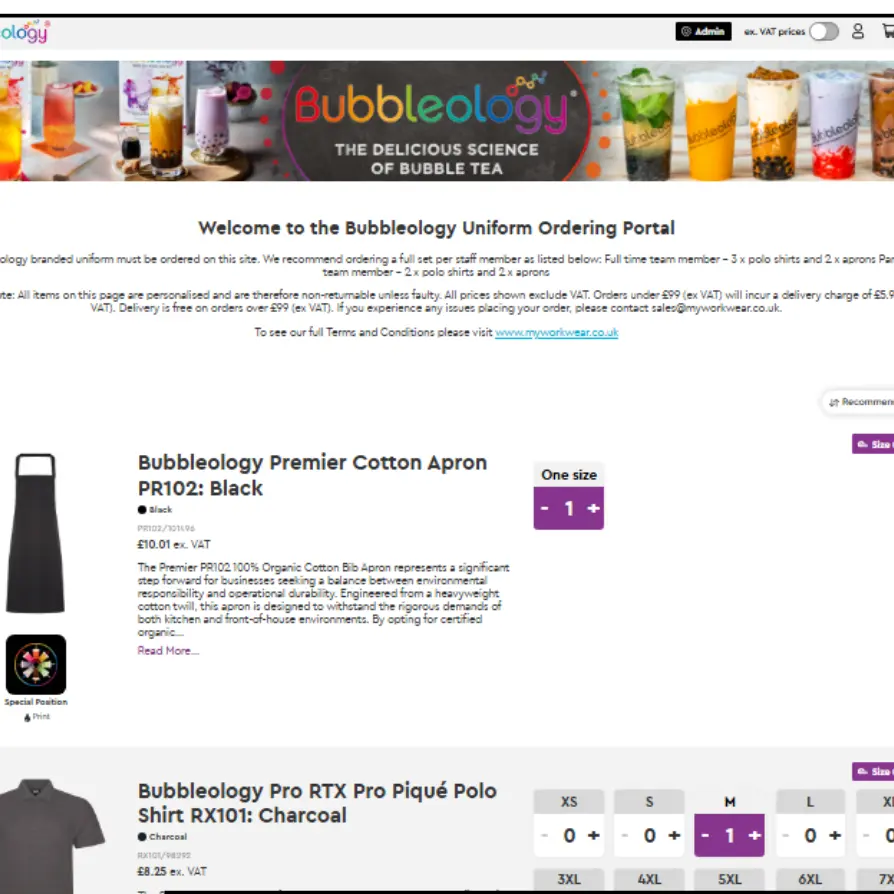
Our employee uniform portal is built for organisations that manage workwear across a team, department, or multi-site operation. Staff log in, see only the garments they’re approved to order, and place their own requests within defined boundaries. Managers control what’s visible, what’s orderable, and which items need sign-off.
The merchandise portal is built for teams, clubs, charities, and community organisations that want to sell or distribute branded kit without holding stock.
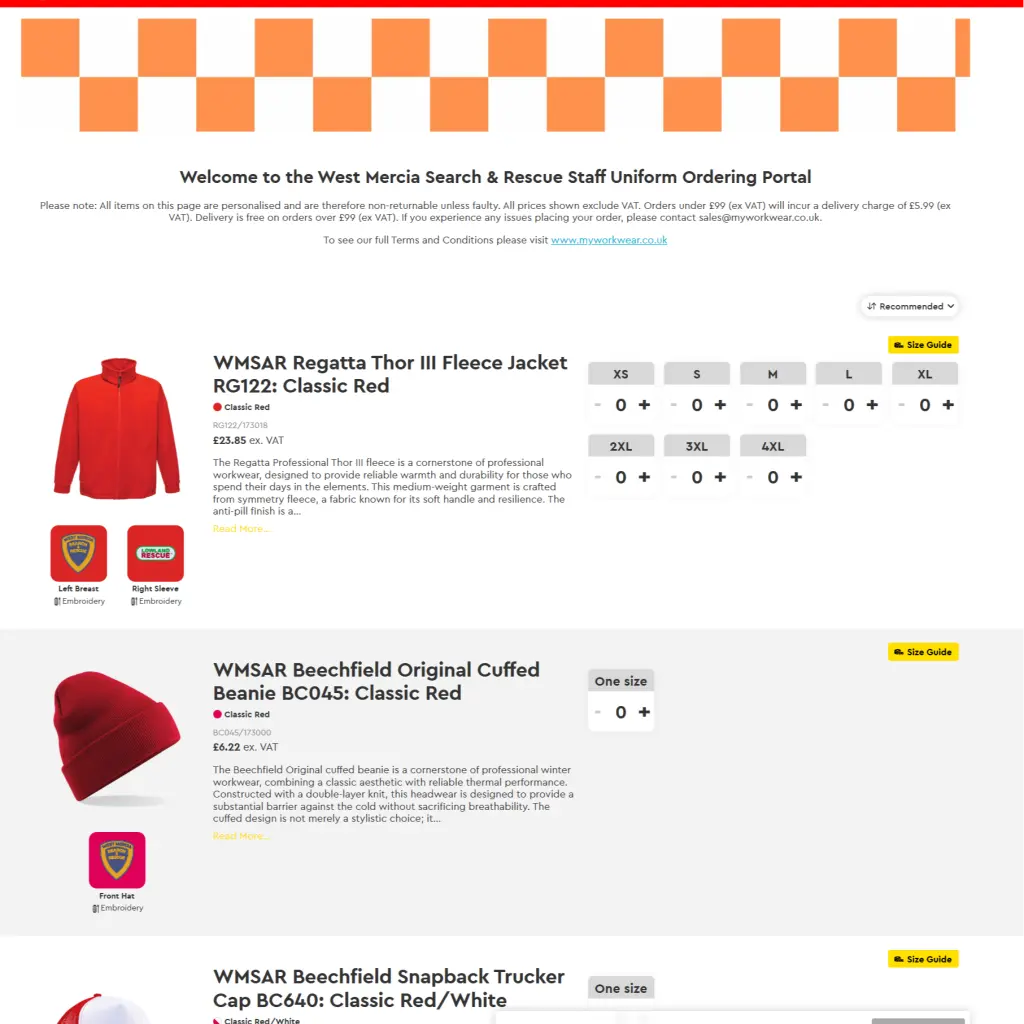
West Mercia Search & Rescue, for example, runs two lines with MyWorkwear: a team portal where members order the kit they need, and a public-facing merchandise store where people can buy branded gear directly. MyWorkwear handles fulfillment, and the organisation receives revenue from sales.
The key Benefits of a Workwear Ordering Portal
Ordering workwear manually creates more work than it should. A portal doesn’t just tidy the process up; it removes the parts that cause the most friction.
Time savings
With an employee portal, new starters and existing staff can order their own workwear directly. Share a link, they log in, and they select what they need. Sizes, quantities, and delivery addresses are all handled at their end. For businesses onboarding regularly or with high staff turnover, this alone saves time.
Cost control
The portal only shows what your business has pre-approved. Staff can’t order garments outside their role, add unapproved logos, or request items above their budget. Pricing can be hidden from wearers entirely while approvers still see full costs. Purchase order numbers can also be made mandatory at checkout for easier budgeting. The controls are there to use as much or as little as your operation needs.
Consistency
Every order goes out with the right logo, in the right position, on the right garment. There’s no scope for individual managers to make their own branding calls, no risk of an old logo appearing on a new order, and no need to re-brief suppliers each time. At MyWorkwear, approved designs sync directly from our production system, so what’s on the portal is always current artwork.
Reduced admin
No more chasing email chains, manually collating sizes, or fielding queries about what people are allowed to order. Managers add users by email, assign roles in a couple of clicks, and receive notifications when orders need approval. Spend is monitored per worker and per department, so there’s full visibility without having to compile it manually.
Scalability
Whether you’re running one site or a hundred, the portal structure stays the same. Disparate teams can see different garments within a single link. Warehouse staff won’t be ordering office shirts, and office staff won’t be ordering hi-vis. Multi-site delivery, consolidated shipments, and individually bagged and named garments are all available within the system.

Who Should use a Uniform Ordering System?
A portal suits any business where workwear ordering is taking up time it shouldn’t, or where keeping workwear the same is proving harder to maintain than it ought to be.
SME’s scaling up
What works at 20 people can easily break at 80. A portal puts the right structure in place before the manual process becomes unmanageable.
Multi-location businesses
If workwear decisions are currently made centrally but delivered locally, a portal replaces the coordination layer with a system that tackles it automatically.
High staff turnover industries
Construction, logistics, hospitality, and warehousing regularly onboard and offboard people. A portal means new starters can be provisioned quickly without manual intervention.
Teams, clubs, charities, and community organisations
If you want to offer promotional items or branded merch to the public without committing to stock, a merchandise portal removes the risk. Members order what they want, when they want it, and MyWorkwear handles the rest.
Portal vs Traditional Ordering
The alternative to a portal isn’t a particularly tidy system. It’s often a medley of email requests, spreadsheet size lists, approval chains that rely on individuals being available, and a supplier relationship that resets slightly with every new order.
The practical problems this creates are wide ranging. You could end up with orders placed with outdated artwork, garments ordered for the wrong role, size errors that only surface when the delivery arrives, or an admin overhead that nobody officially owns but everyone feels.
A portal replaces the parts of your process that generate errors with a system that prevents them from happening in the first place.
How it Works in Practice
Whatever your operation looks like, our portals can adapt to it. These are some of the most common situations our customers come to us with, and how the portals handle them.
New starters
Let’s say you have a new starter joining on Monday. Their manager adds them to the portal by email, assigns their role, and shares a link. The starter logs in, sees the available garments for their role, selects their size, and places the order. It arrives branded, named, and ready to hand out. Nobody has to chase anything.
Seasonal staff
A hospitality business takes on 60 seasonal summer staff. Rather than coordinating 60 separate requests, the operations manager shares the portal link with the cohort and each orders their own kit. Orders are consolidated, bagged by name, and shipped together. The manager gets one delivery rather than 60 separate conversations.
Branded merchandise
A charity wants to raise funds through branded merchandise. A public merchandise portal goes live with their kit, and supporters can buy directly. The charity receives revenue, and MyWorkwear fulfills every order.
Pairing a Portal With a Bulk Order Strategy
A workwear ordering portal works particularly well alongside an initial bulk order. Many businesses place a larger order first to benefit from volume pricing, then use the portal for controlled top-ups as new starters join or garments need replacing.
This method makes costs more manageable. The bulk order establishes the stock and the pricing baseline, and the portal keeps your next order within approved parameters without triggering the full procurement process each time.
Setting up a Portal With MyWorkwear
An employee workwear portal isn’t as complex as you might think. Our team takes care of the setup. Then, once your garments and branding are agreed, the portal is configured to match your structure - departments, roles, budgets, and delivery addresses. A PDF guide and video walkthrough are also provided so your admins can manage it independently from day one.
The portal connects directly to MyWorkwear’s production system, so order status updates in real time from placement through to dispatch and delivery. If you manage workwear for a team of any size, or you want to offer branded merch without the stock headache, it’s worth a conversation.
Here at MyWorkwear, we have been proud suppliers of personalised workwear since 1976.
To see how we can provide the perfect workwear for your team to keep them looking professional and performing at their best, please click the button below.