Embroidered Workwear vs Printed Workwear: Which Branding Option is Best?
Ask most businesses what they want from workwear, and you’ll get the same answer - professional, durable, and on-brand. What few businesses think about is the way a logo is applied to a garment and how it can affect all three goals.
Whether you’re investing in custom-branded workwear for the first time or reviewing what’s working for your team, the choice between embroidery and printing is worth getting right. It has a direct impact on how your brand is perceived, how long your uniforms last, and how much value you get from each garment.
This guide covers how embroidery and printing differ, what each offers in terms of aesthetics, durability, comfort, and sustainability, and how to decide which branding option best suits your team.
First Impressions Matter - How Branding Affects Perception
A company’s uniform is the first physical touchpoint customers experience, so the branding technique you choose will ultimately set the tone for your brand. Embroidery and printing each send a different message.
Premium vs modern appeal
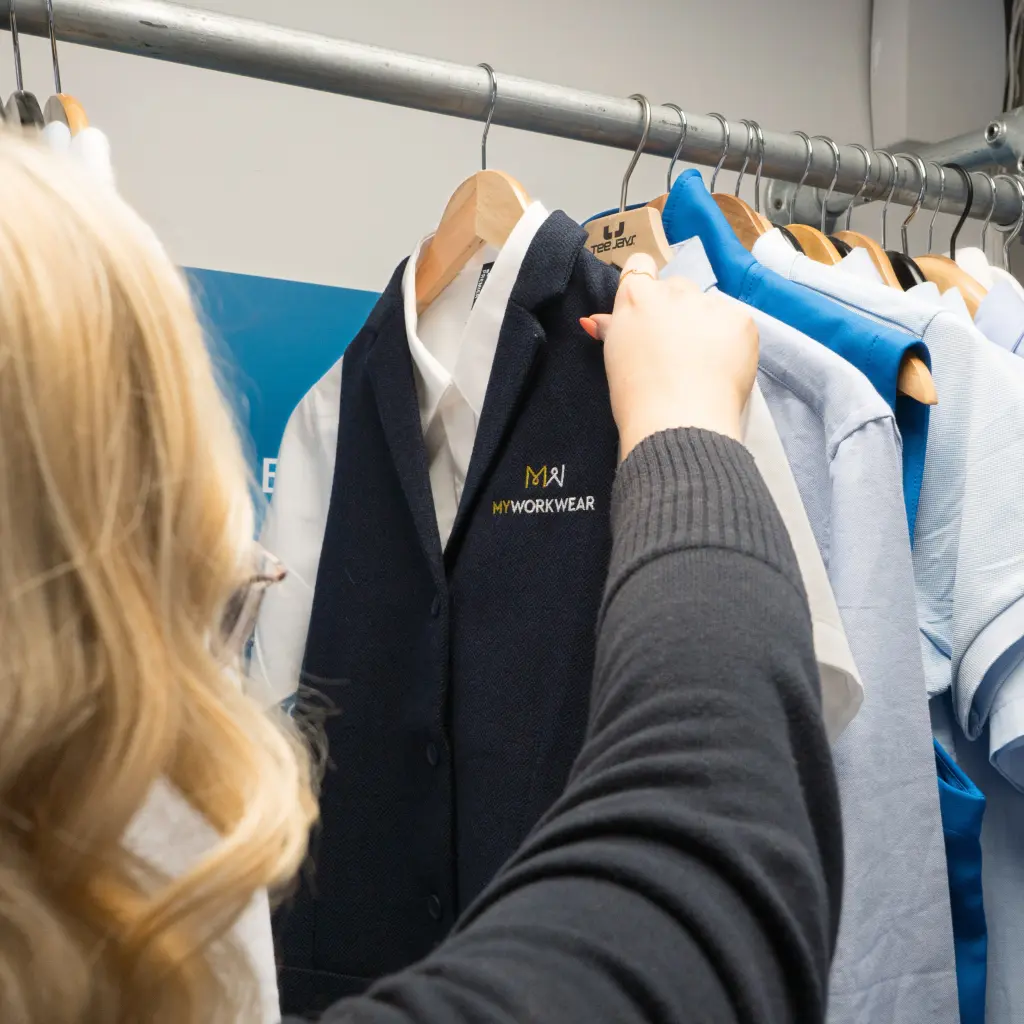
Embroidery stitches your design directly into the fabric with coloured threads, resulting in a raised, textured finish that looks considered and high-end. The result is a finish commonly associated with corporate polo shirts and tailored jackets - one that signals quality and a consistent, professional standard.
By contrast, printing applies ink or film onto the garment surface, producing a flat design that allows for bold colours and graphic creativity. A smooth print can feel modern and vibrant, so it’s ideal for promotional wear and casual team apparel.
Perception shapes customer trust
Customers are quick to judge professionalism. Raised embroidery conveys authority and tradition, reinforcing that your company takes its image seriously. Printing, especially large or artistic designs, can appear a little less formal but more expressive. This communicates energy and approachability for businesses that want to project creativity.
The right choice comes down to the image you want to portray and the expectations of your industry. For many businesses, the answer isn’t always obvious until you look at both side by side.
Durability and Wearability
Workwear needs to last. Whether your team is on-site, on the move, or customer-facing all day, durability should be a key consideration.
Embroidery
Since it’s stitched directly into the fabric, embroidery is incredibly hard-wearing. It won’t peel, crack, or fade in the same way that surface-applied designs can. Even after repeated washing, the logo typically looks just as sharp as when it was first applied.
Embroidery is a strong choice for uniforms worn frequently, especially in sectors like construction, logistics, and manufacturing.
Printing
Rather than being at one with the garment, printing sits on top. While modern printing techniques are durable, over time they can begin to fade, crack, or wear, particularly if garments are washed at high temperatures or tumble dried regularly.
For lighter-use items such as promotional clothing or event wear, where longevity isn’t a primary concern, printing performs well. It’s worth noting that some print methods, such as direct-to-film printing that we utilise, tend to hold up better over time than heat transfer alternatives. It’s important to ask your supplier about the specific technique they use.
Comfort and Garment Feel
Comfort plays a huge role in whether employees actually enjoy wearing their uniform, and that can impact everything from morale to presentation.
Embroidery
Because embroidery uses stitched thread to create a slightly raised texture on the garment, the design will simply move with the clothing. However, larger embroidered designs or high stitch density can feel heavier or stiffer, particularly on lightweight fabrics.
For most workwear applications, such as polos, jackets, or fleeces, this isn’t noticeable, but it’s something to think about for thinner garments.
Printing
Printing keeps the fabric largely unchanged, so garments remain soft, flexible, and lightweight. Printed garments, like t-shirts and hoodies, suit high-movement roles well, or any application where a soft, uninterrupted feel matters. This is particularly important for staff working long shifts, where physical comfort has a direct bearing on performance and morale.
The one caveat is that large printed areas can sometimes reduce breathability slightly, which is worth considering for outdoor or active roles in warmer weather.
Versatility of Design
Your logo and branding style will often influence which method works best for your workwear.
Embroidery
For clean, simple designs, like logos, names, and small graphics, embroidery is a great choice. It delivers a sharp, professional finish, particularly when used on the chest or sleeve. However, it does have limitations. Fine details, gradients, and highly complex designs can be tricky to replicate accurately with thread.
Printing
Printing offers more flexibility when it comes to design complexity. It can handle multiple colours, gradients, large-scale graphics, and detailed artwork with ease. Printing suits bold branding, creative industries, and promotional clothing where visual impact takes priority.
As a general rule, embroidery tends to suit corporate, trade, and industrial environments - those where a consistent formal finish matters. Printing is often the better fit for events, creative businesses, and retail environments where personality and visual energy are part of the brand identity.
Take a closer look at getting the best results from embroidery.
Brand Consistency Across Garments
Workwear consistency makes it easier to maintain a recognisable brand image, especially for businesses with multiple teams or locations. Whichever method you choose, getting your staff uniform branding standardised from the outset is the most reliable way to ensure consistency.
Embroidery
Embroidery provides excellent consistency. Logos are stitched in the same position, with the same thread colours, and uphold their appearance over time across multiple garments. It’s ideal for businesses that prioritise a uniform, professional look across all staff. To maintain consistency on reorders, ensure thread colour references and logo specifications are kept on file with your supplier.
Printing
Printing can also be consistent, but results may vary slightly depending on the garment type, fabric, and print method used. Fading and wear may only become apparent when team members stand together, but from a customer’s perspective, that inconsistency is immediately noticeable.
Employee Engagement and Pride
Workwear doesn’t just stop at branding and making clothing look the part. It also affects how employees feel when they wear it.
Embroidery
Embroidered uniforms often feel more “official”. The finish is associated with quality and professionalism, which gives employees more confidence and pride when representing the business. For teams where presentation is central to the role, like account managers or front-of-house staff, that sense of polish can make a genuine difference.
Printing
Printed garments suit teams in creative, retail, or event environments, where personalities are part of the brand. The more relaxed, expressive feel of print aligns well with company cultures that value individuality and informality. A team that feels at ease in their uniform is more likely to wear it well.
Sustainability and Environmental Impact
For businesses reviewing their workwear, sustainability has become a priority consideration, and the branding method you choose has more of an environmental impact than many people realise.
Embroidery
Embroidery is generally considered a lower-waste process. It uses thread rather than inks or chemicals, and because embroidered garments tend to last longer, they need replacing less frequently. This reduces the overall volume of workwear going to waste over time.
Printing
Printing methods vary considerably in their environmental impact. Direct-to-garment printing using water-based inks is generally the more eco-friendly option, while plastisol inks and heat transfer methods tend to be more resource-intensive. Since printed designs may not last as long as embroidery, garments can sometimes need replacing sooner, which is worth factoring in if sustainability is a priority for your business.
Making the Right Choice for Your Team
Choosing between embroidered vs printed workwear comes with many considerations, but it typically comes down to how your uniforms will be used, who will wear them, and what you need them to communicate.
If your priority is long-term durability, a professional and premium appearance, and consistency across your team, embroidered workwear is often the top choice.
If you need bold, creative designs, larger graphics or detailed artwork, or a more budget-friendly option for short-term use, printed workwear may be best for you.
It’s also worth thinking about the garment itself. Heavier fabrics like fleeces and structured polo shirts tend to take embroidery well, while lightweight t-shirts and performance fabrics are often better suited to printing. Matching the method to the material is just as important as matching it to the design.
In practice, many businesses use a combination of both - embroidery for core uniforms and printing for promotional or seasonal items. There’s no reason the two can’t work alongside each other as part of a broader uniform strategy.
If you’re unsure which method suits a particular garment, ordering samples before committing to a full run is always worthwhile. It’s a straightforward way to sense-check fit, finish, and quality before placing a large order.
Choosing the Best Branding Method for Your Business
Knowing where logo embroidery and printing each excel makes your decision significantly easier, and means you’re far less likely to end up with garments that don’t perform as expected. Whether you’re after professional workwear logos that stand up to daily use or bold printed designs that reflect your brand’s personality, the right workwear branding option is out there.
At MyWorkwear, we help businesses find the right solution for their teams, from high-quality embroidered uniforms to vibrant printed designs, or a combination of both. With the right approach, your workwear won’t just look good; it’ll work hard for your brand every day.
Browse our personalised workwear range to find the perfect fit for your team.
Here at MyWorkwear, we have been proud suppliers of personalised workwear since 1976.
To see how we can provide the perfect workwear for your team to keep them looking professional and performing at their best, please click the button below.