

So, what is moisture-wicking workwear?
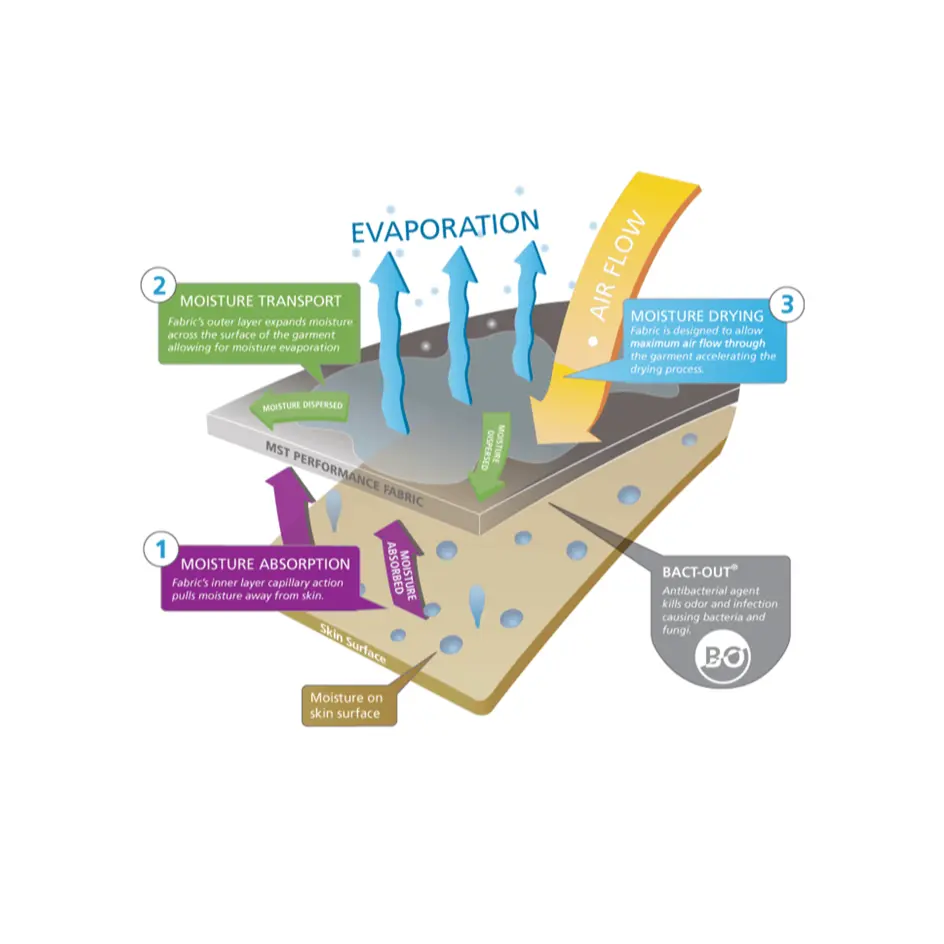
Moisture-wicking workwear is made from fabric designed to draw sweat and moisture away from the skin and towards the outer surface of the garment, where it can evaporate easily.
Moisture-wicking workwear has become a popular choice for work uniforms with teams that work in hot and outdoor environments. The technology is built into the fabric and helps cool and regulate body temperature by evaporating sweat more effectively.
Read on to find out how wicking fabric works, who it is best suited to and why it could be worth considering for your next workwear order.
How Does Wicking Fabric Work?
Wicking fabrics are modern technical fabrics designed to draw moisture away from the body. They are made of high-tech, lightweight polyester, which absorbs relatively little moisture and helps to move sweat towards the outside of the fabric.
If you’ve ever worn a cotton T-shirt on a hot day you would know that the clothing would hang onto your sweat (and we all hate that) like when it rains and your T-shirt feels glued to your back, definitely a shudder-worthy moment. This will add weight, and over time, make the garment uncomfortable to wear.
Simply put, wicking is when the fabric wicks sweat and moisture away from the body towards the outer surface of the garment to keep the skin of the wearer dry.
Balancing Style With Substance
Looking and feeling good in your uniform is vital, as it’s one of the first things your customers noticed about your team.
However, substance (in other words, practicality) will always outweigh style.
A uniform might look great when it’s first handed out, but if it becomes uncomfortable after a few hours of work, your employees are unlikely to be impressed. That’s why choosing workwear should involve thinking about what your team actually does during the day, rather than simply choosing a garment because it looks good.
The trick is to find the right balance between looking the part and feeling comfortable enough to get the job done.
Who is Moisture-Wicking Workwear Best For?
All businesses are different. Just because you share the same industry with your competition, it doesn’t necessarily mean that you do things in the same way. That’s why your team must have the appropriate workwear to suit their needs.
Everyone perspires, whether their individual role is an active one or they are outdoors often. By choosing workwear that can help manage moisture, you can make a uniform more comfortable to wear throughout the working day.
We find that moisture-wicking workwear isn’t suited to just one type of worker and can be useful for anyone, including:
Construction and trade teams
Landscapers and gardeners
Warehouse and logistics staff
Delivery and transport teams
Hospitality, catering and kitchen staff
Manufacturing teams
Outdoor workers
For your next uniform, why not consider wicking fabric garments. The remarkable moisture-sapping fabric can have a positive effect on your entire workforce. You don’t necessarily need to choose exactly the same wicking garment for everyone, either. Your outdoor team might benefit from lightweight T-shirts, while customer-facing employees may prefer a smart polo shirt.
The important thing to consider is who is wearing the garment and how this will benefit their working day.
Why Wicking Fabric?
So, why should you consider wicking fabric for your workwear?
The biggest benefit is moisture management. When working in warm environments, sweat can quickly become uncomfortable and a distraction. That makes it a practical choice for active workwear, where employees spend long periods on their feet and work physically.
Wicking material is an increasingly popular type of fabric in modern workwear due to its properties and is fast becoming the fabric of choice thanks to flexibility and comfort for the wearer.
Ultimately, choosing wicking fabric comes down to understanding your workforce.
Considering The Personal Touch
There are many deciding factors to consider when purchasing workwear for your team, but rather than only considering just the top-level aspects like budget, brand awareness, and timescale, perhaps look a little deeper and see the human practical requirements of the matter.
Embroidery and printing are two popular ways to add your logo to workwear, and each offers a slightly different finish.
Embroidery involves stitching your logo directly onto the garment using coloured thread. It creates a smart professional finish and is particularly popular on polo shirts, sweatshirts, giving them a premium feel.
Printing is a versatile option for T-shirts, polos and lightweight workwear. It’s particularly useful if your branding contains multiple colours, fine details or if you want your logo to be larger and more prominent.
Not sure whether embroidery or printing is right for your team? We can help choose the most suitable options based on your garments and branding requirements.
Want to learn more about cooling workwear, read our HeiQ Technology blog.